
Blog
We are committed to providing customers with high-quality and low-price steel products as its goal, and strives to create value for customers as its own responsibility.
Stainless steel bars are a common metallic material widely used in industrial manufacturing, construction, medical equipment, food processing, and other fields. They are made from stainless steel ingots through hot rolling, forging, or cold working, and possess excellent corrosion resistance, heat resistance, high strength, and good machinability.
Main types and specifications
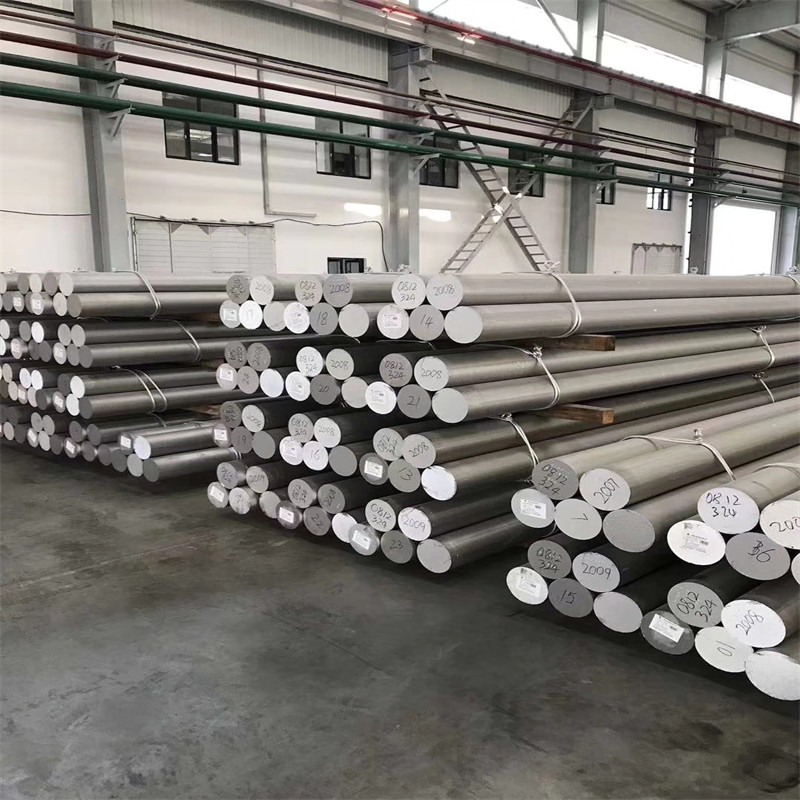
Stainless steel bars can be classified according to their shape as follows:
Round Bar: Diameter typically ranges from 1.0mm to 250mm; common materials include 304, 316L, and 310S.
Square Bar: Square cross-section, sizes ranging from 3×3mm to 120×120mm.
Hexagonal Bar: Suitable for machining mechanical parts; distance between opposite sides is generally between 4mm and 55mm.
According to surface treatment, it can be divided into:
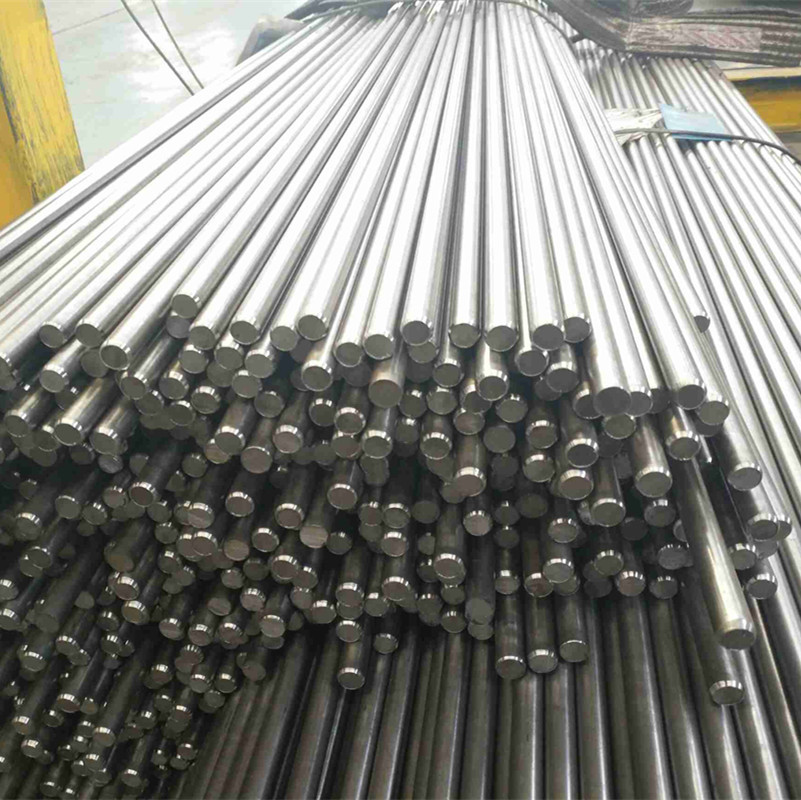
Bright bars: Processed by cold drawing, grinding, or polishing, resulting in a smooth surface, high precision, and a higher price.
Black bars (black rods): Original surface after hot rolling or forging, with a lower cost.
Common materials and properties
Implementation Standards
Chinese Standards: GB/T 1220-2007 "Stainless Steel Bars", GB/T 4226-2009 "Cold-Worked Stainless Steel Bars"
International Standards: ASTM A276 "Standard Specification for Stainless Steel Bars and Profiles", JIS G4303 (Japanese Standard)
How to choose the right stainless steel bar material?
I. Prioritize material selection based on application scenario
1. For general environments and daily use, choose 304 stainless steel bars.
Advantages: High cost-performance ratio, good corrosion resistance, and excellent processing performance.
Applicable scenarios:
Architectural decoration (railings, door and window accessories)
Food industry equipment (sinks, conveyor belt parts)
Home hardware, medical device housings
Note: Meets GB 4806.9-2016 food-grade standards and is safe and reliable.
2. Highly corrosive environments (coastal, chemical, salt spray) → Select 316L stainless steel bars
Advantages: Contains molybdenum (Mo), significantly better resistance to chloride ion corrosion than 304 stainless steel.
Applicable Scenarios:
Marine engineering, ship components
Chemical reactors, acid and alkali treatment equipment
Coastal building structures
Special Note: 316L is the low-carbon version, which is more resistant to intergranular corrosion after welding and is suitable for applications requiring welding.
3. High-temperature environment (>800℃) → Select 310S or 321 stainless steel bars
310S: High temperature resistance up to 1150℃, suitable for boiler and heat treatment furnace internal components.
321: Contains titanium (Ti) as a stabilizing element, exhibiting good resistance to high-temperature oxidation and creep, suitable for aerospace and energy equipment.
4. Precision machining required → Select 303 or 304F free-machining stainless steel bars
Advantages: Contains elements such as sulfur and selenium, which improves cutting efficiency and results in a high surface finish.
Applicable scenarios:
Automatic lathe machining of bolts and nuts
Small parts for electronic instruments, precision shafts
Note: Its corrosion resistance is slightly lower than that of 304 stainless steel; it is not recommended for use in highly corrosive environments.
5.High strength & wear resistance requirements → Choose 420 or 440C martensitic stainless steel bars
Advantages: Can be heat-treated for hardening, high hardness (HRC up to 50 or higher)
Applicable scenarios:
Knives, surgical instruments;
bearings, valve seals
Disadvantages: Corrosion resistance is average; regular maintenance is required.
II. Core Reference Indicators for Material Selection
III. Recommendations for Balancing Cost and Performance
Don't blindly pursue high-end materials.
Avoid low-price traps.
Prices are negotiable for bulk purchases.


GET A QUOTE