
Blog
We are committed to providing customers with high-quality and low-price steel products as its goal, and strives to create value for customers as its own responsibility.
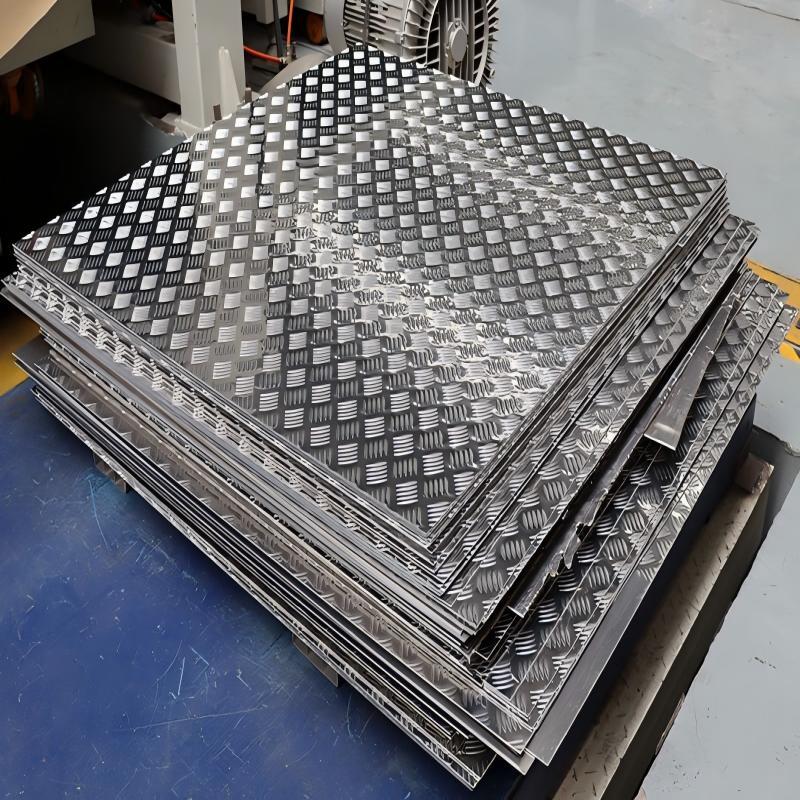
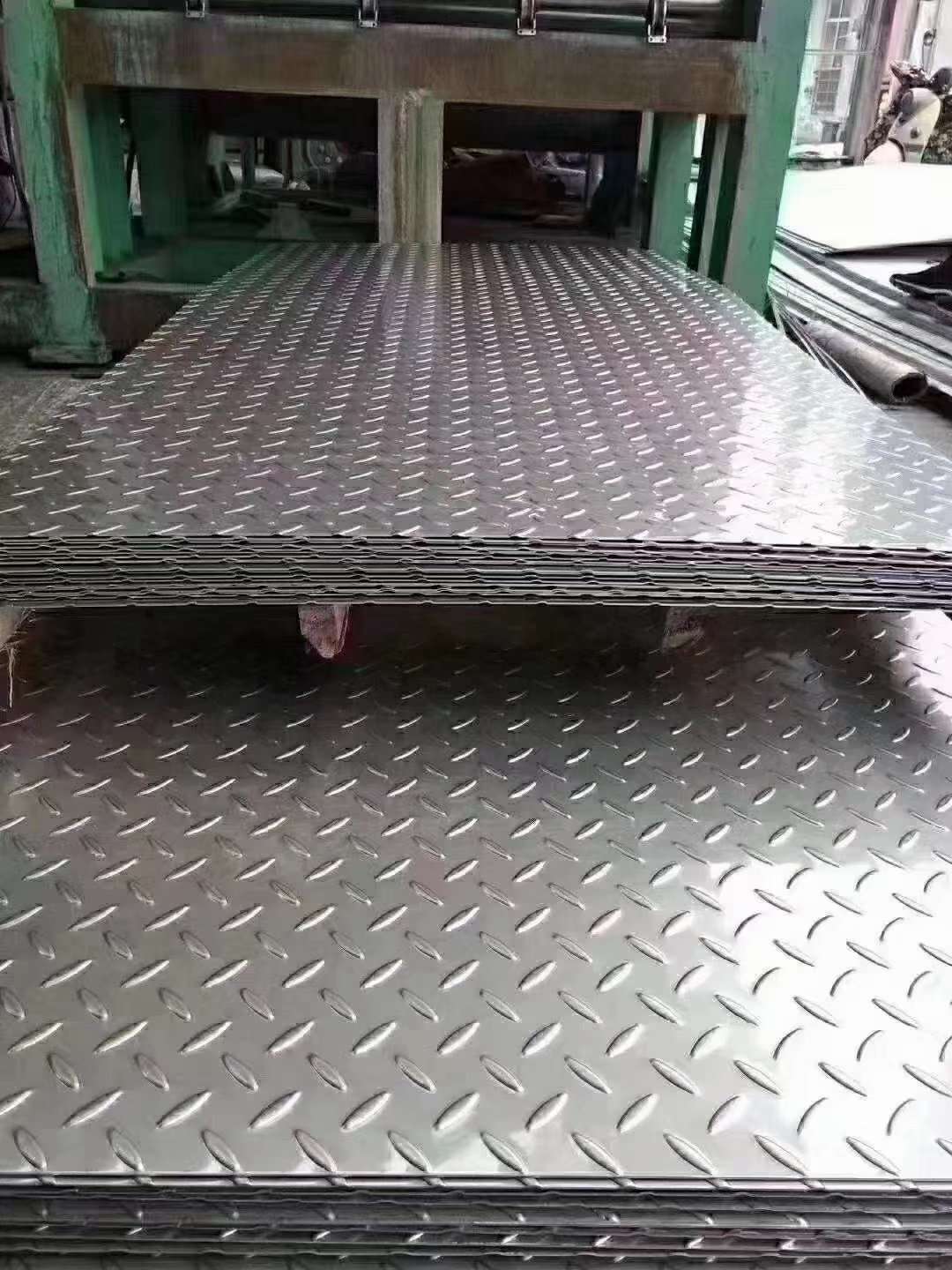
Checkered Stainless Steel Plate is a type of non-slip metal sheet with a regular diamond-shaped raised pattern on its surface. It is widely used in industry, construction, and transportation to improve pedestrian safety and structural durability. Its core feature is the continuous diamond pattern formed on the stainless steel surface through a rolling process, significantly increasing the coefficient of friction and preventing slips and falls. It is particularly suitable for wet, oily, or highly abrasive environments.
Key features and advantages
1.Superior Anti-slip Properties:
The diamond-shaped raised structure effectively breaks down water and oil films, providing stable grip. In wet environments, the coefficient of friction typically reaches over 0.45, far exceeding that of ordinary steel plates.
2.High Strength and Durability:
Made of high-quality stainless steel such as 304 and 316, the tensile strength generally exceeds 520MPa, and the elongation is no less than 40%, capable of withstanding heavy loads and impacts.
3.Strong Corrosion Resistance:
Especially noteworthy is the 316 stainless steel containing molybdenum, which exhibits outstanding resistance to chloride ion corrosion, making it suitable for harsh environments such as coastal areas, chemical plants, and offshore platforms.
4.Easy to Clean and Maintain:
The smooth and corrosion-resistant surface resists stains, meeting the high hygiene standards required by industries such as food and pharmaceuticals.
5.Aesthetically Pleasing and Practical:
The metallic luster combined with regular patterns creates a modern industrial aesthetic, making it suitable for design scenarios such as fashion week shows, embodying the fusion of functionality and aesthetics.
Common specifications and parameters
Typical application scenarios
Industrial applications: Workshop floors, equipment platforms, and stair treads to prevent slips and falls in oily environments.
Construction applications: Rooftops, walkways, and handrails to improve safety during rain and snow.
Transportation facilities: Subway platforms, bridges, docks, and ship decks to ensure the safety of pedestrian and cargo transport.
Special applications: Anti-slip surfaces for fitness equipment, swimming pool surrounds, and automotive brake components, etc.
How to choose the right stainless steel anti-slip plate?
I. Select materials according to the usage environment: corrosion resistance is the core.
Different environments have vastly different requirements for the corrosion resistance of materials, and choosing the wrong material may lead to rusting and failure in a short period of time.
For general dry indoor environments (such as shopping malls and office buildings), 201 stainless steel is a good choice due to its lower cost and basic rust prevention.
For humid or mildly corrosive environments (such as kitchens, factory workshops, and drainage ditches), 304 stainless steel is recommended. It has a high nickel content, good oxidation resistance and resistance to weak acids and alkalis, making it the most cost-effective mainstream choice. Suitable for most industrial and civil applications.
For highly corrosive or marine environments (such as coastal areas, chemical plants, and ship decks), 316 or 316L stainless steel must be used. Containing molybdenum, it significantly enhances resistance to chloride ion corrosion, making it suitable for long-term exposure to salt spray or chemical media. If welding processes are involved, the 316L low-carbon version is preferred to prevent intergranular corrosion.
II. Select thickness according to load-bearing requirements: Ensure structural strength
Thickness directly affects load-bearing capacity and service life.
Lightly loaded areas (e.g., pedestrian walkways, stair treads): 0.8–1.2mm is sufficient.
Medium-heavy loaded areas (e.g., equipment platforms, logistics warehouses): 1.5–3.0mm is recommended to enhance compressive and deformation resistance.
Extremely heavy-duty or outdoor extreme conditions: 3–5mm thicker plates are optional; some industrial scenarios even employ cast-in-place structures to improve stability.
III. Choose surface texture according to anti-slip requirements: Safety first.
Different texture designs affect the coefficient of friction and visual effect, and must be combined with functionality and aesthetics.
Tip: Applying a brushed finish to the surface before production can further increase the coefficient of friction and enhance the anti-slip effect.
IV. Other Practical Selection Suggestions
1. Size and splicing: Common board sizes are 1000×2000mm, 1219×2438mm, etc. Larger boards have fewer seams and are more efficient to install; smaller boards are more flexible and suitable for complex terrain.
2. Aesthetics and Cleaning Maintenance: Stainless steel has a strong modern luster, making it suitable for areas that are publicly displayed. For daily cleaning, it can be wiped with dish soap; welding slag or rust can be treated with a special "steel cleaner".
3. Budget Control
316 > 304 > 201; Serrated plate > Patterned plate. Prioritize cost-effective combinations while ensuring safety.


GET A QUOTE