
Blog
We are committed to providing customers with high-quality and low-price steel products as its goal, and strives to create value for customers as its own responsibility.
Checking steel quality is essential before using it in construction, pipelines, manufacturing, or industrial applications. Poor-quality steel can lead to structural failure, leakage, corrosion issues, and financial losses.
Whether you are an engineer, contractor, or buyer, understanding how to check steel quality helps ensure safety, durability, and compliance with project requirements.
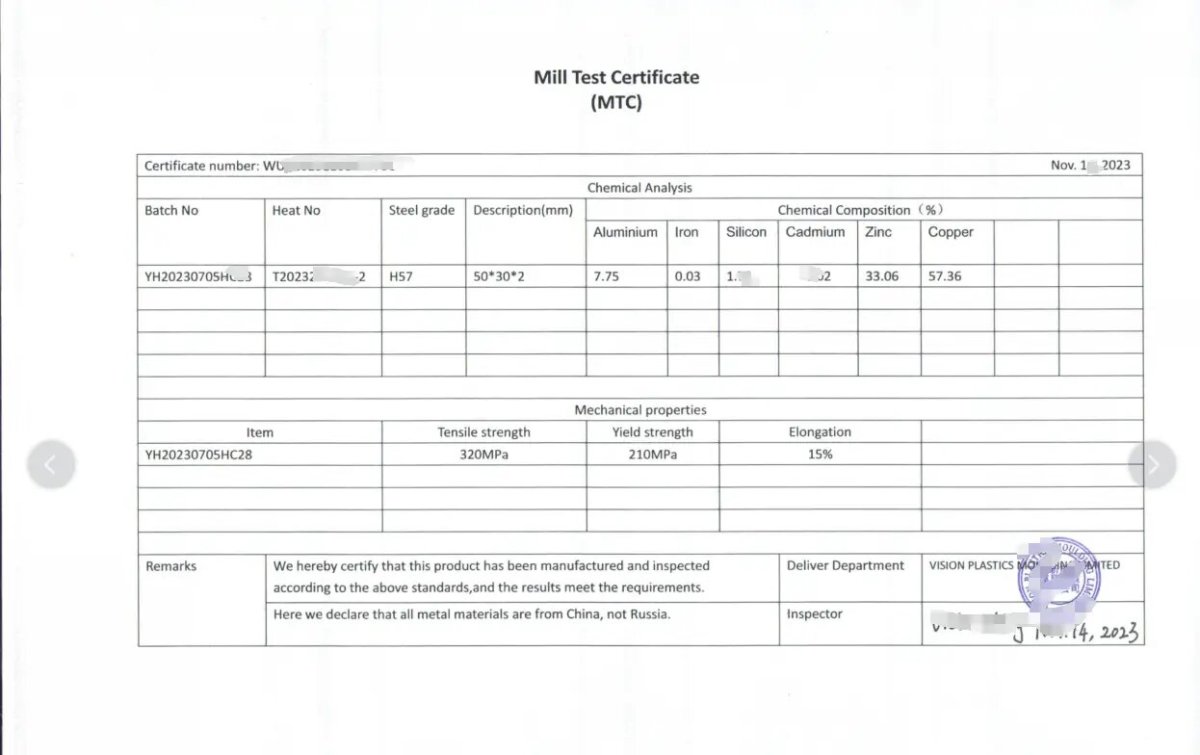
1. Check the Material Certificate (MTC)
The first step in checking steel quality is reviewing the Mill Test Certificate (MTC).
An MTC typically includes:
- Chemical composition
- Mechanical properties
- Heat number
- Standard and grade
- Testing results
Make sure the standard and grade match your project specification. The heat number on the steel product should correspond to the certificate.
2. Verify Chemical Composition
Steel quality depends heavily on its chemical composition.
Key elements include:
- Carbon (C)
- Manganese (Mn)
- Chromium (Cr)
- Nickel (Ni)
- Molybdenum (Mo)
For example, stainless steel 316 contains molybdenum, which improves corrosion resistance compared to 304.
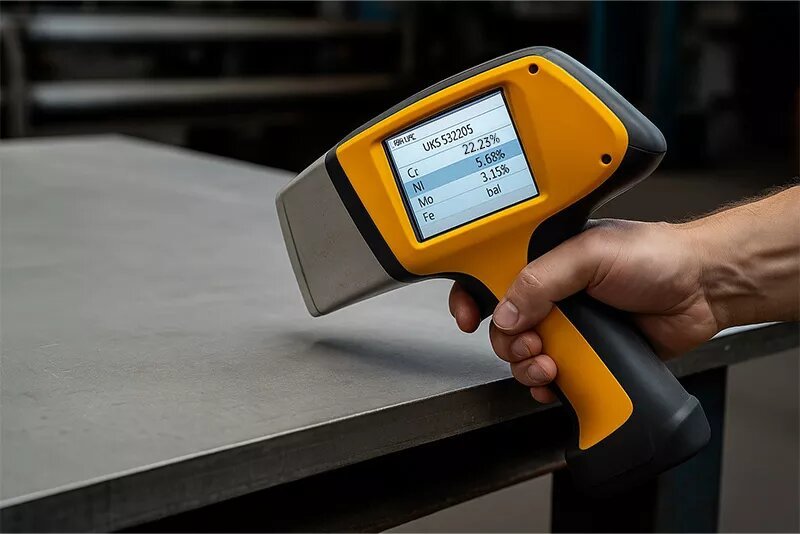
Chemical composition can be checked using:
- Laboratory analysis
PMI (Positive Material Identification) device
3. Check Mechanical Properties
Mechanical properties determine strength and durability.
Important values include:
- Yield strength
- Tensile strength
- Elongation
- Hardness
These should meet the requirements defined in standards such as:
- ASTM A106
- API 5L
- ASTM A312
4. Perform Visual Inspection
Visual inspection is simple but important.
Check for:
- Surface cracks
- Rust or corrosion
- Lamination defects
- Poor welding seams
- Incorrect dimensions
Also verify markings printed on the steel, such as grade and standard.
5. Dimensional Inspection
Measure:
- Outer diameter (OD)
- Wall thickness (WT)
- Length
- Straightness
Use calipers or ultrasonic thickness gauges to confirm compliance with tolerance requirements.
Incorrect dimensions can cause installation problems.
6. Non-Destructive Testing (NDT)
For critical applications, NDT is required.
Common methods include:
- Ultrasonic Testing (UT)
- Radiographic Testing (RT)
- Magnetic Particle Testing (MT)
- Hydrostatic Testing
These tests detect internal defects without damaging the material.
7. Corrosion Resistance Testing
For stainless steel and alloy steel, corrosion testing may be required, especially in marine or chemical environments.
Improper material selection can cause premature failure.
8. Verify Supplier Reliability
Steel quality is not just about material — it also depends on supplier control.
Check:
- Production process
- Quality control procedures
- Third-party inspection reports
- Export experience
Reliable suppliers provide complete documentation and traceability.
Common Mistakes When Checking Steel Quality
- Ignoring the MTC
- Assuming all stainless steel grades are the same
- Not verifying heat number
- Overlooking dimensional tolerances
- Skipping NDT for high-pressure systems
Conclusion
Checking steel quality requires a combination of document verification, chemical and mechanical testing, visual inspection, and supplier evaluation.
By following these steps, engineers and buyers can ensure steel materials meet safety standards and perform reliably in real-world applications.
If you need assistance verifying steel materials or selecting the correct grade, professional technical support is always recommended.


GET A QUOTE